“Card Talks” contain our biblical musings about the cards in the game. In each we propose an idea, a perspective, a reason why one of our cards is so “OMG THEY CAN’T SAY THAT!” We attempt to present something profound, comical, sobering, or a painful combination thereof.
We say, “here are our thoughts based on intense study of the Hebrew/Greek/Aramaic text, countless commentaries, preaching, teaching, counseling, pastoring, living life, wrestling with God, screaming at God, screaming at self, prayer, and being grade-A smart-asses made in the image of God. We may be wrong, but do with them what you will.”
Scroll through our current Card Talks below, or search for the Biblical passage, tag, or keyword to see what we've covered. If you don’t see the card you’re looking for, contact us and we’ll move it up the Card Talk cue. To read Guest Card Talks written by other clergy, bloggers, & Bible nerds, click here. If you want to write with us, click here.
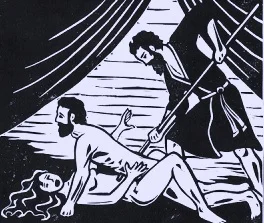
Sometimes a story about a spear through the genitals is not about sex…

On Sukkot and guest rooms: Why rethinking the "traditional" mis-tellings of the Nativity is so important.

The Bible is an ancient text filled with stories that, on first (or second, or third) pass can seem very nasty, brutish, and short. But there is generally an underlying morality that makes perfect sense in an Ancient Near East context, and can still be applied today. Like “do what God tells you” and “don’t be a hypocrite!”
![Altar Sex (Amos 2:8) [A Guest Card Talk]](https://images.squarespace-cdn.com/content/v1/55a9a1e3e4b069b20edab1b0/1624391036636-9QTOOVRIFUW7971ZXQB8/women.jpg)
“The closest I ever came to having sex was right after prayer.” For many young adults, this observation would serve as a catalyst for a more active prayer life, but for us pious young men at a Christian college, this advice from a graduating senior served as a warning. Intimacy is risky and dangerous and, if you’re not careful, you’ll end up in the wrong holy of holies.
“As a white person, I haven’t experienced bone-deep rage many times in my life, if ever. I have zero experience with grinding, tormenting, humiliating oppression. By praying this psalm, I came face to face with the tiniest glimpse of what it’s like to be oppressed, and the fury it deserves.”

Perhaps you should take stock of your complicity in the oppression of others, despite your many reasons for saying you’re not a racist - sexist -homophobe - transphobe - ageist - ableist - elitist - [insert other assholery] because of [insert the ‘close personal friend/relative’ (who really isn’t)].

Jesus stormed into the Temple, made a whip, threw tables, broke animal pens, and went house with a weapon. But some say He was never “violent.” How do we reconcile the two? How do we live with the tension?

All analogies break down eventually, but when dealing with the Bible the consequences can be pretty stark. There are dangers to meme-ing the Bible, even when the intentions and message are good.

Perhaps you should ask if you can see the person, not condemn them for their action, and speak to them, as a person, in love, before you say anything at all about the “sin” you’re bothered by.
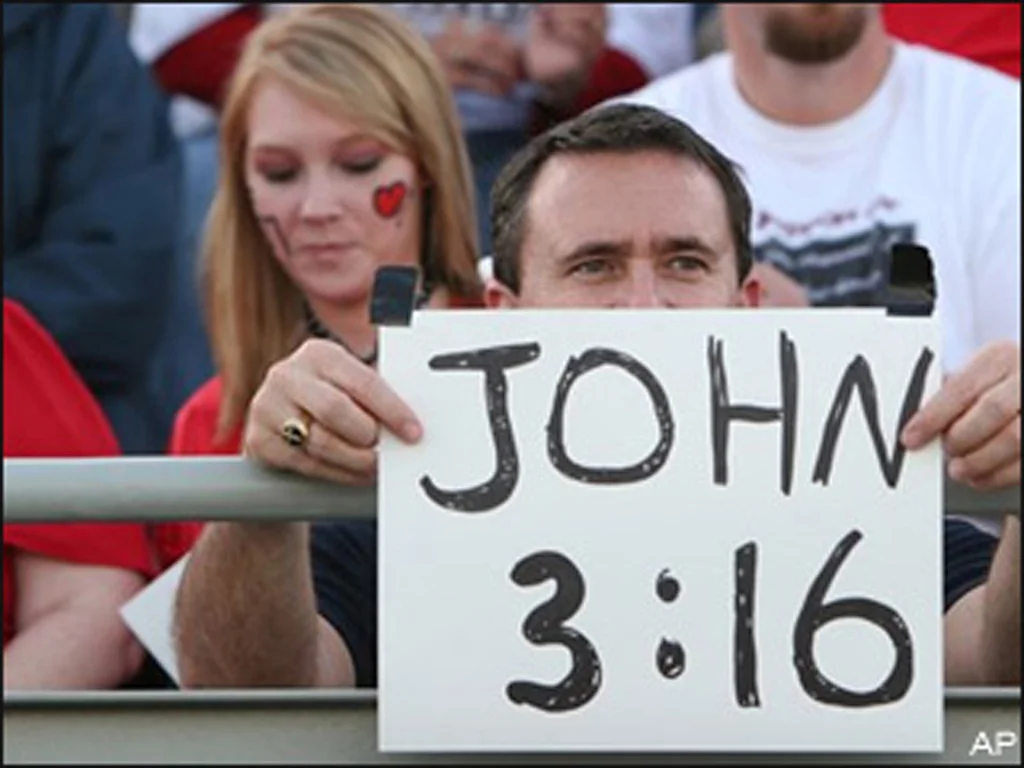
Learning to read Bible references is like learning to walk, talk, or wipe one’s own arse: you cognitively understand that someone helped you acquire proficiency at these skills, but often have no memory of the event.
![Trampling the Heads of the Poor into the Dust & Denying Justice to the Oppressed (Amos 2:7a) [A Card Talk on the Book of Amos]](https://images.squarespace-cdn.com/content/v1/55a9a1e3e4b069b20edab1b0/1498320217004-77V0OAC1GLUZKQALM1XL/blue_bra_01_custom-bd460798b934a1dc88306e282cd53086bc462d81-s800-c85.jpg)
Here we present some historical and textual context to from the book of Amos, and see it's message of social justice still (sadly) applies in the present. We ask what fire will fall in our lives if the acts of inhumanity to man continue to be perpetrated not just out there, but in here, within the community, within the household of faith?

This post illustrates an example where where humor & confusion result from differing translations. And discusses whether priests can bang corpses.
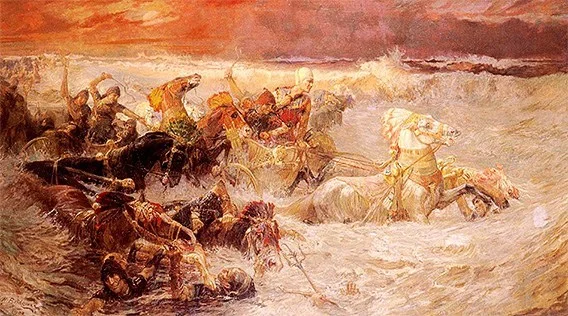
At the heart of theologies that liberate is the belief that there is nothing inherently good about suffering. Suffering is not redemptive, salvation is. So we must eschew shitty soteriologies that place suffering at the center of Christ’s work.

This Easter remember, “the tombs also were opened, and many bodies of the saints who had fallen asleep were raised. After his resurrection they came out of the tombs and entered the holy city and appeared to many.” Wait, WTF?!
![The wise men, three years late for the nativity (Matthew 2:8-11) [An Epiphany Card Talk]](https://images.squarespace-cdn.com/content/v1/55a9a1e3e4b069b20edab1b0/1530285148816-MC2Z121NYA8S42Y6BIQ0/Morris+%26+Co+and+Edward+Burne+Jones_The+Adoration+of+the+Magi_Art+Gallery+of+South+Australia_detalle.jpg)
Beyond the fact that the magi never met the baby Jesus, the true gift of the magi is the epiphany, the revelation, Christ wants us to apprehend: that to be seen standing (or kneeling) for something often means we will suffer.

On what it actually means to be “lukewarm,” and an admonishment to get up from the damn table, or to spit the bread and wine from out of your mouth and stop pretending you break bread with Jesus or His people.

Most of Bathsheba’s story is her silence. Let’s try to hear her voice and remember her ending: the queen-mother of Israel, clothed with strength and dignity, laughing over the graves of her abusers!
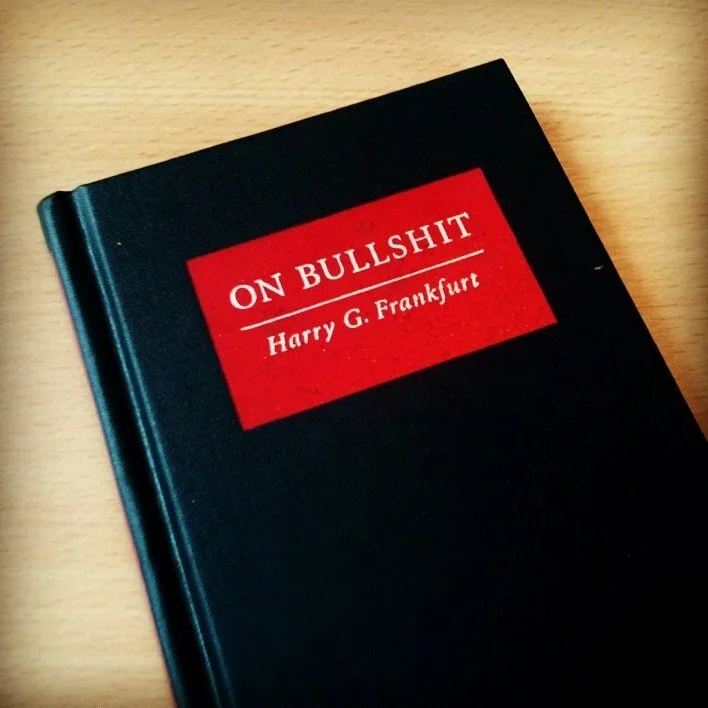
How amazing would it be if Christians acted like responsible human beings and applied biblical principles to how they vet and share information on social media? [tl:dr the Bible says, “do your damn homework or STFU!”]

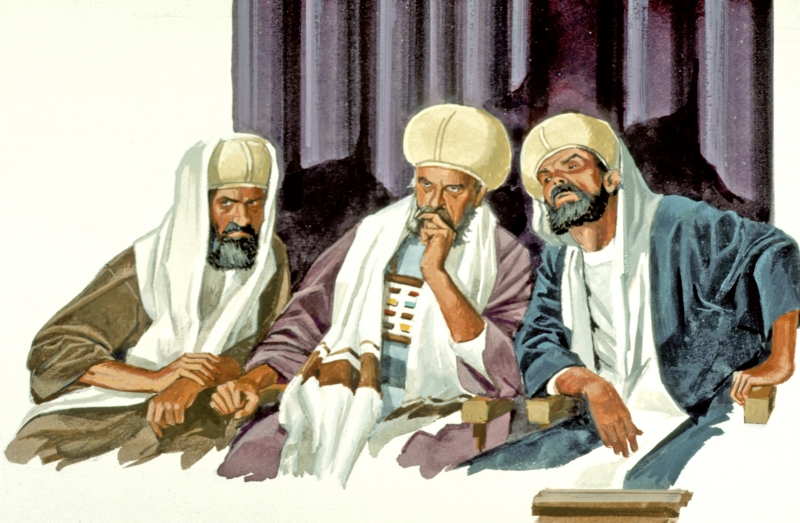
Jesus is a bad ass. No, that’s not blasphemy. It’s fact. Jesus, the incarnation of divinity, the second person of the Trinity, the fullness of the godhead in flesh, spent most of His time officially not screwing around. His handling of His “trial” at the hands of the uptight religious leaders is testimony to this.

The priests in Leviticus are required to make a medical and religious determination for the protection of their flock. They are responding to a physical threat while safeguarding the spiritual health of their community.

Because sometimes those annoying, social justice warrior, millennial snowflakes are absolutely correct when they see the injustice of racism in a biblical narrative. Just like they see it in the world.
![Turning the Other Cheek(s) (Luke 6:29) [A GUEST CARD TALK]](https://images.squarespace-cdn.com/content/v1/55a9a1e3e4b069b20edab1b0/1571963345642-B36O35SJT5MJGPK7JTM0/slap.jpg)
“We are not called to defeat the violence by participating in it. We are called to subvert the violence by exposing it. This means finding those on the margins, and standing in solidarity with them. When we stand side-by-side with those who are being oppressed, we force the oppressor to use their violence against all of us. This means we must leave the comfort of our own bubbles and entangle ourselves in the lives of those who are oppressed.”

While you shouldn’t be having sex with your sister-in-law, Onan’s death isn’t about kinky sex or masturbation: it’s about selfishness that deeply harms the lives of others. But you really should’t be sleeping with your in-laws.
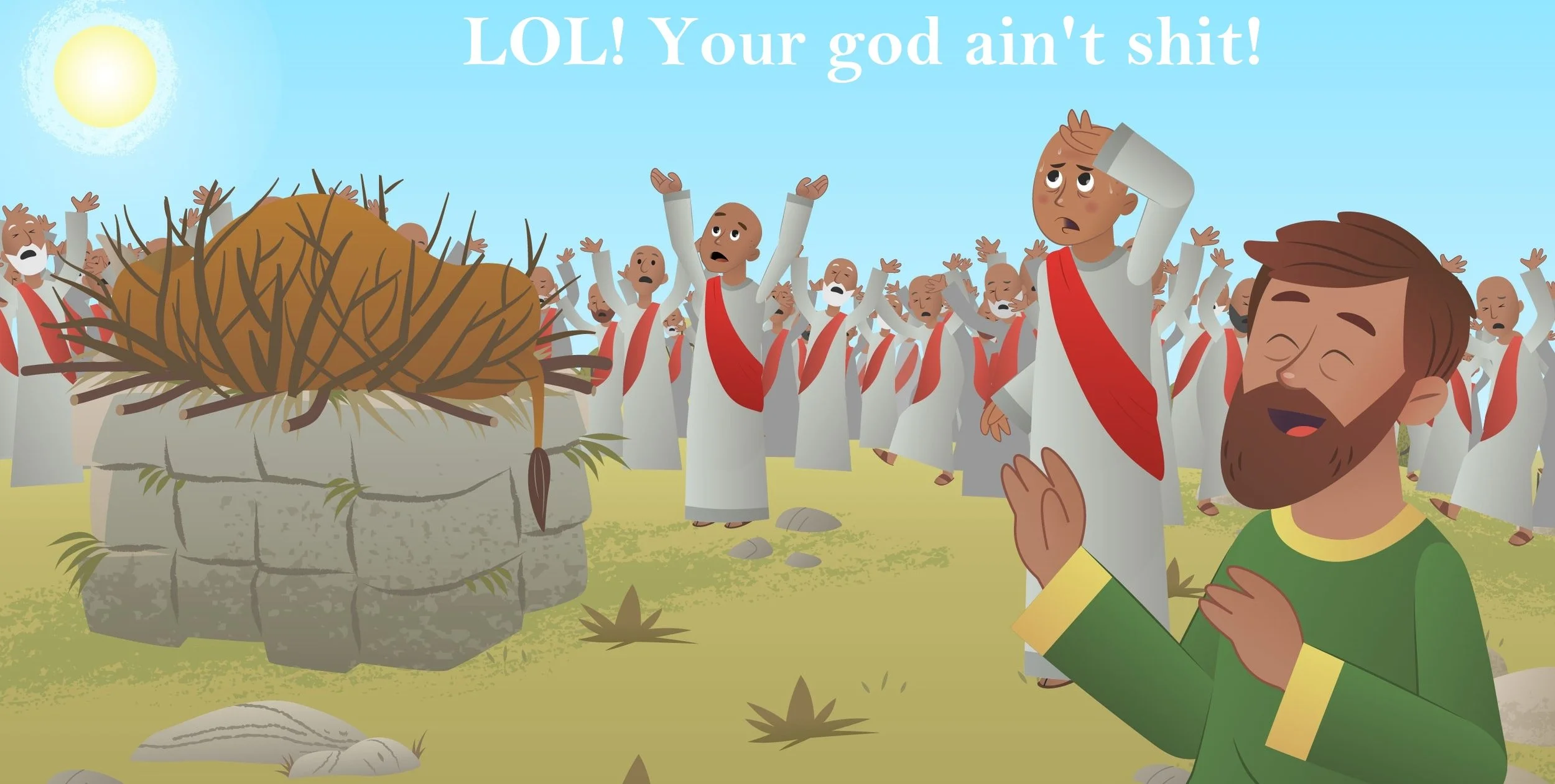
TL:DR ~ The Hebrew Bible (and later rabbinic source) use the motif of shit to denigrate worship of Baal. Yes, actual shit-talk in the Bible!

To be clear: you are the absolute worst, and there will be a reckoning, before God, one day. Hope you’re wearing clean underwear.

Though this passage is more about sociopolitical discernment than friendship, it is a good reminder of all the ways we should love those who love us …..
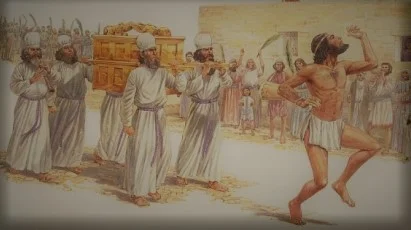
Sometimes kings want to dance in the streets with their scepters hanging out. Sometimes you want to mourn the death of children through social media. We do not have to shit on other people’s joy or pain while processing our own legitimate emotions. There is room for both.

Disclaimer: This Card Talk delves into the relationship between Jonathan, son of Saul, and his friend, brother-in-law, and possible lover, David. This is a long one, and this time we might actually piss off everyone. That’s not our intent, but we’ll see what happens.
![On "Evil Talk" [A Theology of Swearing Addendum]](https://images.squarespace-cdn.com/content/v1/55a9a1e3e4b069b20edab1b0/1557069727895-YGBGHCYC1C0WYGTEVANT/istock-503782483_custom-20a482942a0e99b1e6d54518524a15247f4a44cf-s800-c85.jpg)
We aren’t telling anyone whether they can or cannot, should or should not, swear. But you should know how/why we use “bad words” in our game and Card Talks, before you let “unwholesome talk come out your mouth” about us.
(* An addendum to our Theology of Swearing)
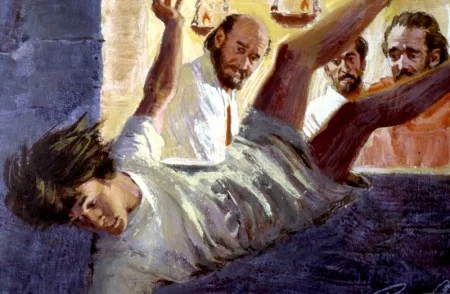
Who knew long sermons and nodding off in church could kill you?

Dear reader: We believe you should not have sex with your mom/dad, stepmom/dad, sister/brother, half-sister/brother, stepsister/ brother, granddaughter/son, aunts/uncles, daughters/sons-in-law, sisters/brothers-in-law, and that it is a pretty safe bet that you should avoid poly-amorous relationships with members of the same family, or your own family. Apparently, so does the Bible.

Fleeing oppression and likely death, the holy family crossed international boarders without papers. They took whatever they could carry, what little resources they had, and fled. Joseph trusted that God would provide for his family: a Brown day laborer with carpentry skills, a young, frightened wife, and their precociously wide-eyed child.

Absalom knew that lighting shit on fire is appropriate when attempting to catch the attention of an unjust system. Thus, Amnon, King David, and their "boys will be boys" bullshit attitude, got exactly what they deserved.

Noah is not the hero of this story: God is, which is horrifying when we consider He just killed most living creatures and threatens to do it again. But maybe we should look at why.

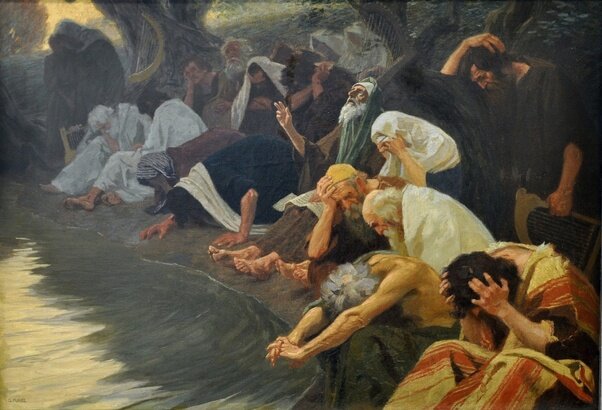
Perhaps we should remember the women in the room when Ezekiel first uttered these words. They had been forcibly marched from their homes. They had watched their families die. Some had been raped by the Babylonians. How did they feel? Perhaps we should remember the women who read these texts today, the women in our churches and homes, whose current situations are not too dissimilar to the women in exile by the rivers of Babylon. They have enough reasons to weep.
![Unbridled Horniness (Most of Song of Solomon) [A Guest Card Talk]](https://images.squarespace-cdn.com/content/v1/55a9a1e3e4b069b20edab1b0/1535733116824-420M6V1INS2N9LLH33OH/r923481_9613492.jpg)
“What the Bible is rather silent on is sexual relationships between two unmarried but committed and consenting people. Except in Song of Solomon. Here, we have a love story in its many facets. There is no judgement and no condemnation. And no guarantee of marriage. And we don’t know what to do with it. And that’s a tragedy.”

Perhaps holiness is the hardest thing there is. Not because we don't know how we should or should not act. Or because we need someone to explain right and wrong. Or because we need someone to bring us a set of divine revelations to act like decent human beings. But because we simply make excuses.

While the woman had sinned, the goal of the religious leaders was not in the interest of community holiness, redeeming the woman, healing a broken family, or mending broken relationships. She was a pawn. Jesus knew all this and responded accordingly.

Ezekiel (misogynistically) took the metaphor of Jerusalem as an unfaithful wife to the extreme. For Zeke, Jerusalem's dalliances with other nations was like her measuring her lover's dick, taking the gifts her husband gave her, making dildos out of them, and then cumming to that instead of the man in bed with her.
![Making Stupid Life Choices and Blaming it on Philippians 4:13 [A Guest Card Talk]](https://images.squarespace-cdn.com/content/v1/55a9a1e3e4b069b20edab1b0/1524245046850-NXYD1JDZZPFAJLCWP4JA/Pain-and-Suffering-After-a-Car-Accident-in-Idaho.jpg)
If we ignore the context of Philippians 4:13, then our problem is much deeper than simply making stupid life choices.

Here we wondering how modern evangelicalism so utterly lost its way, and became rampant with misogynistic and chauvinistic screeds, masquerading as conservative Christian values.
!["Mind your own damn business, Peter!" (John 21:20-24) [A Guest Card Talk]](https://images.squarespace-cdn.com/content/v1/55a9a1e3e4b069b20edab1b0/1524061927712-EKRICYNHHFN0GXDYMTZU/jesus+annoyed.jpg)
"Jesus has a specific calling that the other disciple needed to follow, and this calling looks different than the calling that Jesus has for Peter."
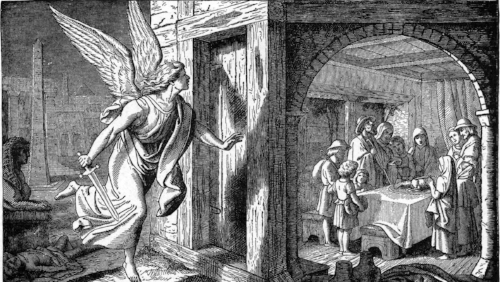
It’s now time to address that scythe wielding, six winged, cherub whose coming heralds fear in the heart of humanity [read that reference again] . . .
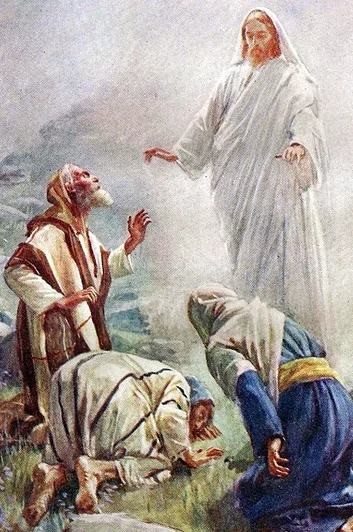
"Peter didn't know what the Hell he was talking about. He had no idea what the mountain-top experience really represented...Moses & Elijah represented encouragement and a reminder to be attentive to faithfulness, because dark days are coming..."
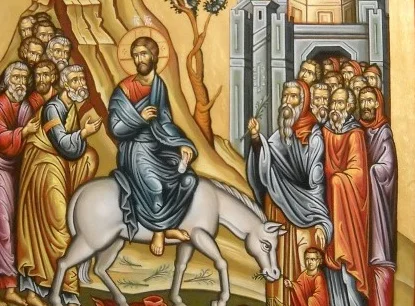
In discussing how fast "faith can move mountains," Matthew cuts Mark's three-day story in half. He speeds up the pace, chronologically and theologically.
![Suffering mocking, flogging, chains, imprisonment, being stoned to death, sawn in half, killed by the sword...(Heb 11:36-38) [A Card Talk for All Saints' Day/ Halloween]](https://images.squarespace-cdn.com/content/v1/55a9a1e3e4b069b20edab1b0/1474606421733-XF0CES1819UR7WZGEHMO/154662.p.jpg)
"...we would like to submit that good Christians tend to read and apply this passage incorrectly because we do not fully understand what the “cloud of witnesses,” the heroes of the faith, really represent ... They aren’t examples, they are warnings."

On the Holy Spirit, Alcohol, and How the Luke-Acts Narrative Contradicts the other Gospels
![Breaking your enemy's teeth, dissolving them like snail slime, aborting them like fetuses, & washing your feet in their blood. On Biblical Schadenfreude [A four for one Card Talk on Psalm 58 ]](https://images.squarespace-cdn.com/content/v1/55a9a1e3e4b069b20edab1b0/1492177727349-3TH5AX3KG1BA8L46IW8P/Peanuts-schadenfreude.png)
Schadenfreude: "enjoyment obtained from the troubles of others." Sometimes God wants to kick your enemies in the face on your behalf.
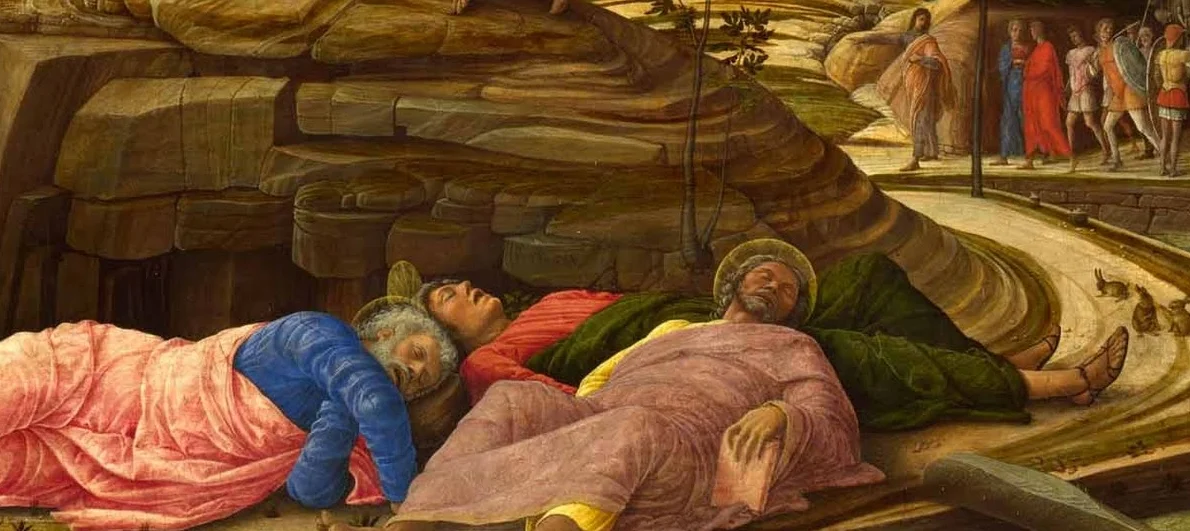
The disciples slept through Judas' treachery no matter how much Jesus tried to shake them awake. From what social and spiritual stupors must we awake? What are we sleeping through?
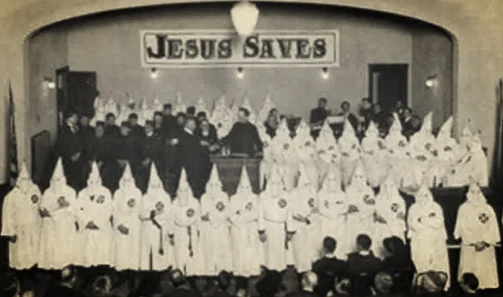
We love happy endings. So we sanitize the passage’s problems to fit the synoptic syllogism: "A is in pain / B loves A / B asks Jesus to help A / Jesus helps A." But that is not this story. This story reads very differently...
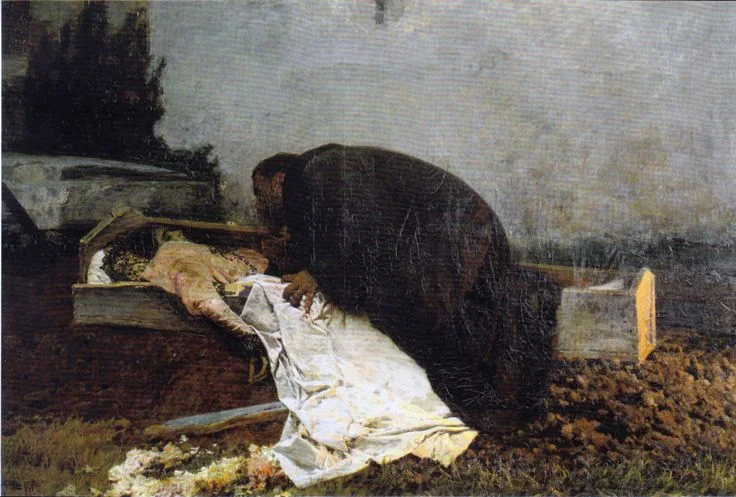
We are not advocating the practice of diddling dead bodies. Repeat: we are not saying you should get down with the departed. No horizontal dancing with the deceased. You shouldn’t make the beast with two back with the bereft. BUT the Bible's silence on the matter is interesting.
![Death by Lion for not Punching a Prophet (1 Kings 20:35-36) [A Guest Card Talk]](https://images.squarespace-cdn.com/content/v1/55a9a1e3e4b069b20edab1b0/1498745366233-OVZPD5RJCWR6C3MUX8VM/animal-1851658_960_720.jpg)
The neat thing is we don't have to do what God's asking us to do. We don’t have to jump in a muddy river seven times, stroll around a city for seven days, or punch our friends in the face. We have free will. That's how God made us.

God is not the father in the story, unless your God really sucks at being a father . . .
![Wide and Narrow Gates (Matthew 7:13-14) [Guest Card Talk]](https://images.squarespace-cdn.com/content/v1/55a9a1e3e4b069b20edab1b0/1494213447072-GP9Q801E9JLH3V1OM731/image58.jpg)
"When I read this card I hear a guideline and see a lens through which to evaluate what I’m doing with my life, in a broad, whole picture view, or within a given, specific situation. It helps me make better decisions, informed by my choice to adhere to Jesus’ teachings to the best of my ability. I don’t do this out of a fear of Hell or destruction, but out of love for life – others’ as well as my own.
![The Capable Wife and the Contentious Wife: “A quarrelsome and nagging wife” (Prv 21:19) & “A virtuous woman as defined by old Jewish men” (Prv 31) [A two-for-one Guest Card Talk]](https://images.squarespace-cdn.com/content/v1/55a9a1e3e4b069b20edab1b0/1494697392428-LF7WFTBPJ3IXX8SC9ZX8/img_1463.png)
"These two wives are held up sort of in opposition. The bits of Proverbs from which they come are not back-to-back, but they’re part of an ongoing comparison between desirable qualities and undesirable. Sometimes these qualities are literally about a wife, sometimes they’re about the inner life of the man being addressed. In both cases, they present two women: Woman Wisdom and Woman Folly, the good wife and the bad wife."

The Bible might be against selling puppies, people, or both in the sanctuary. It depends on your translation.

A follow-up to our post regarding Franklin Graham's position on the refugee crisis, and a response to some unsolicited feedback from a fan. Because sometimes we must meet fake news and alternative faith head on.
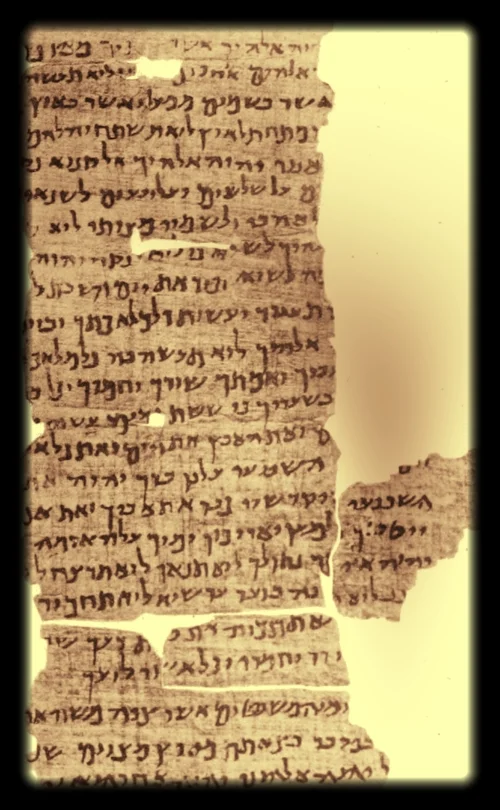
The story of "the rich young ruler" (or "the rich young man") appears in all three synoptic gospels (Matthew, Mark, & Luke). It also challenges one's ability to do theological math.
![Refugees: "not a Bible issue"? OR Why Franklin Graham can go [expletives deleted]...](https://images.squarespace-cdn.com/content/v1/55a9a1e3e4b069b20edab1b0/1485663569387-MZS8YSZFDLEYWQQ6XS48/a-girl-injured-in-aleppo-6-5-2014.jpg)
...Frankie-boy, you brought the Bible into this: That wonderful tome we love, your butt-buddy's tiny hand swore the oath of office on (miraculously, without bursting into flames), and whose dust-covered binding you haven't cracked in years.
![The peace of God, which surpasses all understanding, guarding your heart and your mind in Christ Jesus. (Php 4:7) [A 2017 New Year's Card Talk & Minor Critique of Christian Fatalism]](https://images.squarespace-cdn.com/content/v1/55a9a1e3e4b069b20edab1b0/1483160959140-RFZSQW5L5X3S7RPG5JUV/sign-30240_640.png)
As we ponder the new year we would like to make a simple biblical suggestion: "God is in control" is often an example of Christian fatalism: an anti-intellectual, un-spiritual, amoral cop-out. God may have work to do, but so do you.
!["For [the election]: LORD hear our prayers." [An Election 2016 Post]](https://images.squarespace-cdn.com/content/v1/55a9a1e3e4b069b20edab1b0/1478569294320-6SBEXSG4XVLDDJL5VJE4/198801_348356691925377_1434895381_n.jpg)
No matter the "winner," many of us will feel argghghhahrrrr! We submit ten cards from our Red Letter Deck with the wisdom Christ has for us in the midst of this election season.
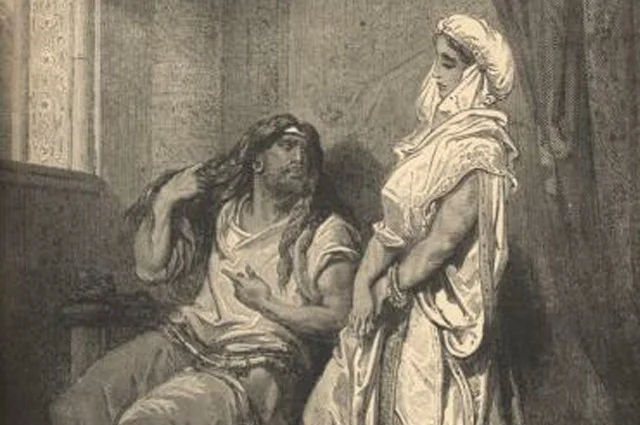
Here's the tl:dr for the lazy: Judges does not present Samson as a hero. The context and structure of the book, as well as the context and structure of Samson's story all point to the same thing: Samson was a self-absorbed human being manipulated, not used, by God. He is an example to be avoided, not upheld.

On the issue of gender in the Bible, our game does the same thing it does with all topics: it tackles and wrestles with the uncomfortable.
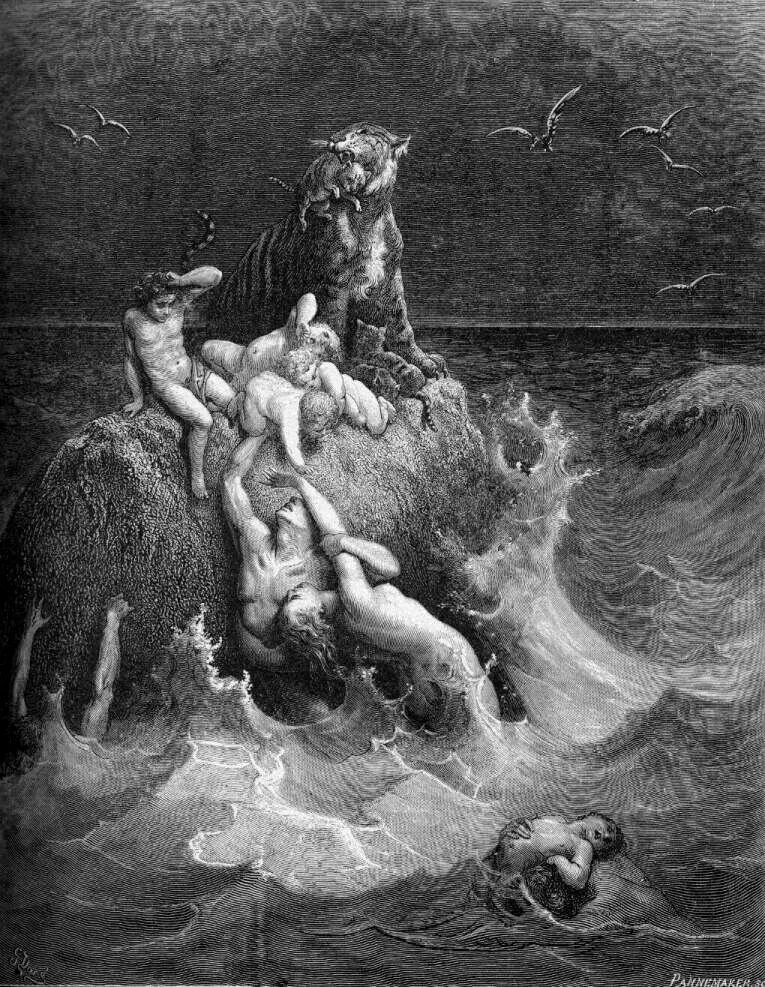
"...What do we do with a silent God who kills His creation? What do we do when a supposedly righteous man remains silent?..."
"...Technically Malachi said God is smearing shit on your face and we’re just quoting him. And if you believe in divine inspiration of Scripture, then God told Malachi to write about God being a shit-smearer..."
!["Women: shut up in the church" (1 Corinthians 14:34) & "Head-coverings keeping angel-lust at bay" (1 Corinthians 11:6-10) [Guest Card Talk]](https://images.squarespace-cdn.com/content/v1/55a9a1e3e4b069b20edab1b0/1471403439167-JVYZP3DIZOVAMGG7YAOI/2013-10-21-UNwomenad2.jpg)
"In the first century, the subjugation and silencing of women was standard issue, and shouldn’t come as a surprise. What should come as a surprise is that Paul was participating in it."

"Perhaps Ludacris read this passage before composing the chorus to "What's Your Fantasy," biblical scholar that he is. Perhaps he got closer to the truth of this text than Matthew Henry. . ."
![Being tricked into circumcision, and while still sore, having your throat slit...because you raped my little sister (Genesis 34) [A Guest Card Talk]](https://images.squarespace-cdn.com/content/v1/55a9a1e3e4b069b20edab1b0/1467927097766-ZJCNQNC2VX0KSEV1NW86/NEWS1-257824122905732.jpg)
"While we may be able to emotionally relate to some elements of this story, the world in which it takes place is utterly unrecognizable to us. We can’t bring really any assumptions into the narrative as we read. It’s a shock to the system."

“Report on God’s redemption of a broken world,” They said. “Give people Canon Cards that have a measure of hope in them,” They said. So we did. And They thought we were making a crude a sexual pun. (Seriously? We just can't win)...

"...you can laugh at “The Virginia Tech Massacre,” but “Babies with their brains dashed against stones” (Psalm 137) is problematic?..."

"If you’re a Christian reading this you have to admit that, in some fashion, you believe in an invisible sky daddy (or mommy, or being beyond gender) who became a human man, and somehow was his own father but was born of a virgin. . . at this point cows in sackclothes seems tame."


. . . one year we’ll defend our belief in an incarnation timed for Sukkoth as there is no way Jesus was born in December, and we’ll write the Card Talk about how the wise men did not show up until He was three years old. Eventually we’ll even address the fact that the little drummer boy was actually a drunk Roman solider looking for his estranged wife (okay, we just made that last one up) . . .
![O Come, O Come Emmanuel (Isaiah 7:14) [An Advent Card Talk]](https://images.squarespace-cdn.com/content/v1/55a9a1e3e4b069b20edab1b0/1483161046976-X5VJE3CMP9T957O72EII/3d-wallpapers-light-dark-wallpaper-35822.jpg)
Sadly, this Advent Card Talk is applicable every year...
!["For Lent I Am Giving Up_______________." [A Card Talk for Lent]](https://images.squarespace-cdn.com/content/v1/55a9a1e3e4b069b20edab1b0/1455382743130-8OY85PUM9DW1R2AJIZG4/image-asset.jpeg)
We take up or give up, lift or put down, for specific purposes, but whichever we choose, the important thing is remembering that Lent is not about self-improvement—it is not New Year’s take two, a time to re-up on failed resolutions . . .
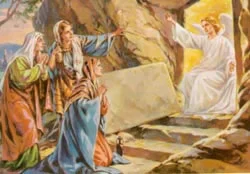
There is a case to be made that this naked boy was really an angel sent to leave Jesus a change of clothes . . .

Perhaps we all have our bouts with mental, emotional, spiritual, and social sheep sex...

![The Day I Realized John Was Faster than Peter or The Day the Bible Became Real to Me [A Guest Card Talk]](https://images.squarespace-cdn.com/content/v1/55a9a1e3e4b069b20edab1b0/1459098680331-P8V46D3A4KGA2UZH4VK5/dan-burr-mindre.jpg)
These people that I read about and had put on a pedestal were no better than me. They sucked just as much as I do. But God still used them and told us their stories. That gave me hope.
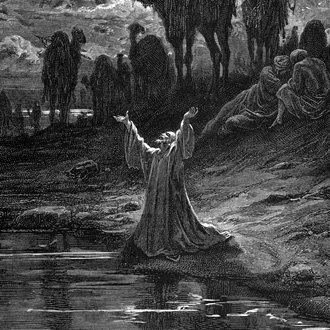
When everything seems— when everything is— completely and utterly broken, the righteous continue to love while just barely keeping their shit together.
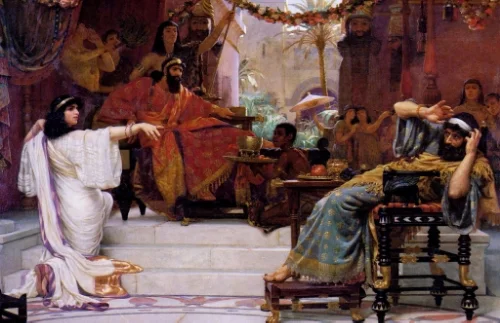
On Purim and the fact that the historical record is clear on this account: rulers in the Ancient Near East liked to shove things up people’s butts when they were mad.

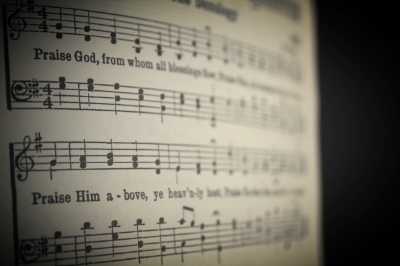
There are 66 books in the (Protestant) Bible, but only about eight in the Good Christian's Choice Selections of Common Praise for Worship, Remembrance, and Joy Together in Song Book of the Faith . . .

Yes. The Bible talks about wet dreams. While this post proves that we did not pull this card out of our collective butts, there is more at stake here than puritanical sensibilities of when one's love juice should leave the box.



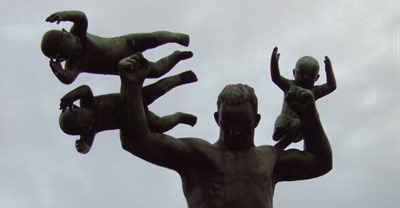
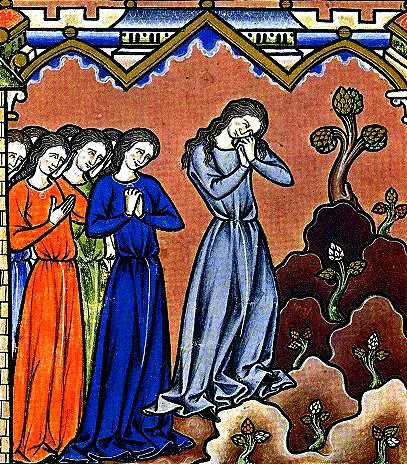
“Perhaps this is part of his punishment: a man who knew the value of family, destroyed the happiness he had; a man unable to treasure the gift in hand, lost it.”


Did you ever wonder what happened after they destroyed the Golden Calf? They drank it. What? Yes.


How you play our game is completely in your hands. You the player. You the liver of life. You the lover.


Perhaps this law is a microcosm of the idea that the God of the Hebrew Bible cares deeply for life, even for those who say, "I'm a good Christian who doesn't understand the Old Testament, and didn't Jesus do away with all this legal code nonsense anyway?"


![Loving God While Not Being a Dick to Everyone Else (The Whole Sum of the Law, the Prophets, and the Gospels) [A New Year's Card Talk]](https://images.squarespace-cdn.com/content/v1/55a9a1e3e4b069b20edab1b0/1546317381135-1KDYPQ9ONZWH8VQOJDJU/JESUS+nye.jpg)

Remember: for some this season, family is unsafe.



"...why can't these books be holy while still simply speaking of human love and romance? Is it because we've regulated sexuality to the basest, vilest, unspeakable regions of the theistic experience; sex has gotten so much bad press, that a book in the Bible cannot be only speaking about sensuality?"

While we don't want to take shots at other Good Christians, "Ezekiel bread"? Really? While others have commented on this in the past, we still have a few questions.

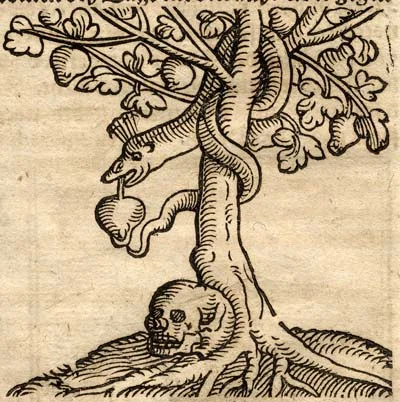
In response to the assertion, “God put that tree there because He just wanted humanity to fall!” STFU and RTFM.


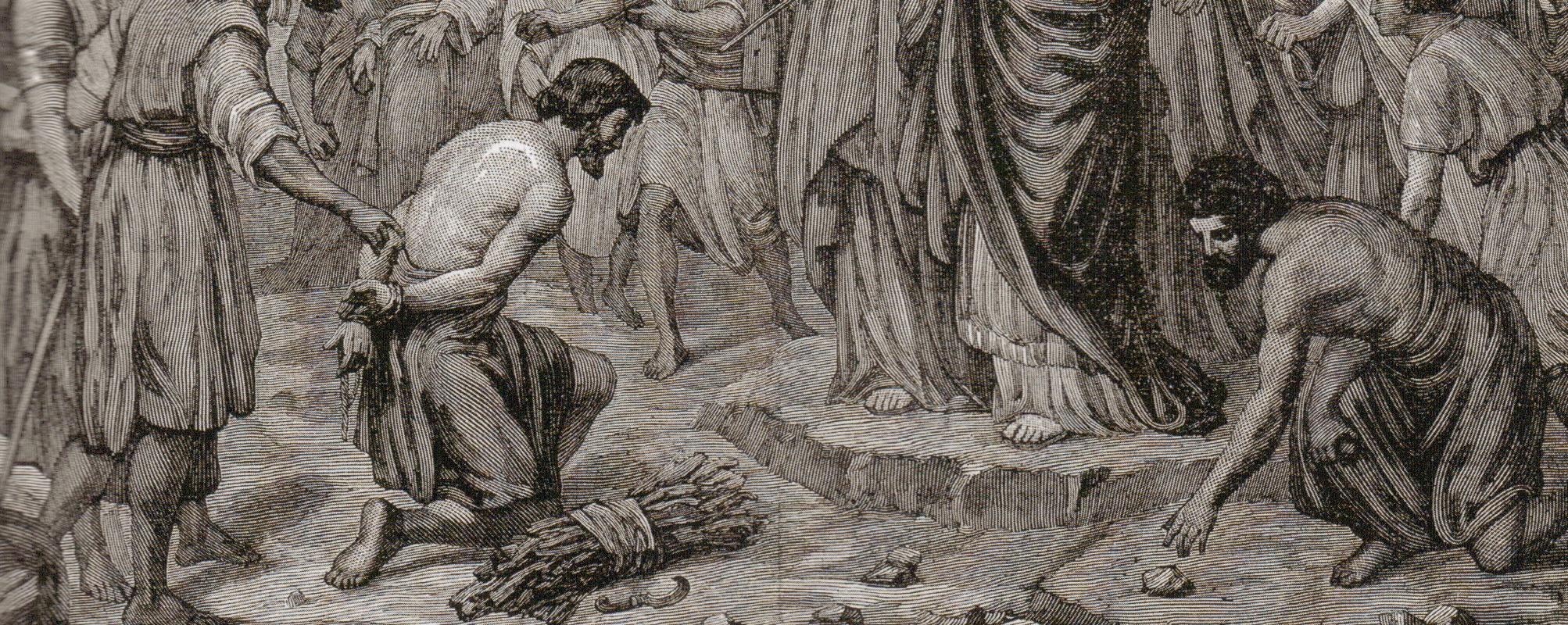


On why we haven’t created “A Game for Good Muslims”

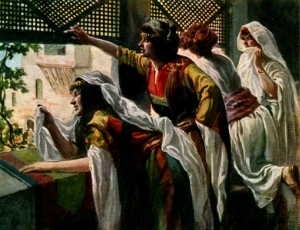
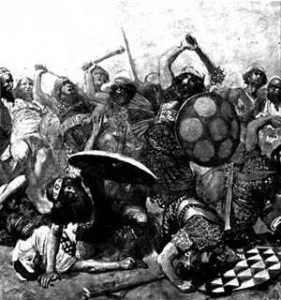
Because clearly, some people just need to die.

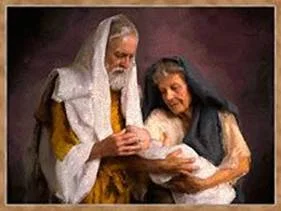
"A woman is not a field in which seed is sown and brings forth fruit in its season. She is a person. Furthermore, a woman is not defined by her ability to procreate. "
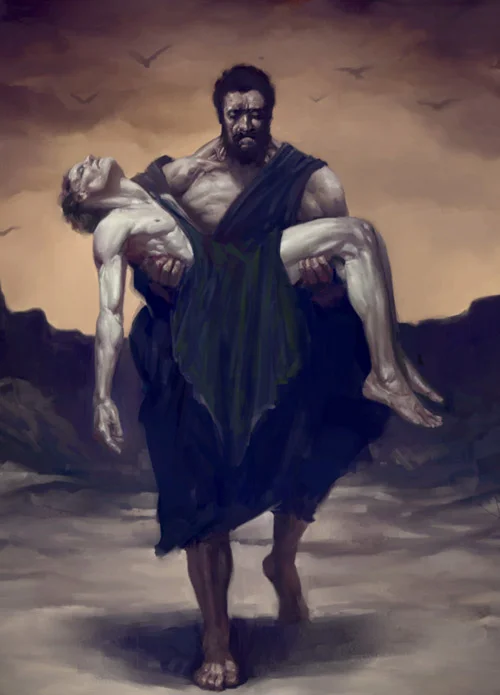
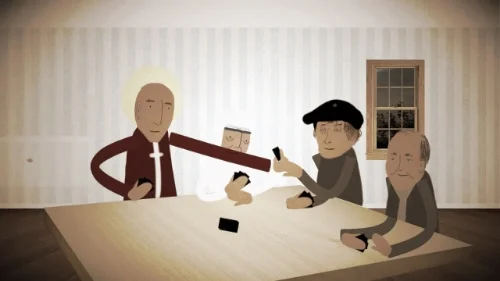
Yes, you might be offended playing this game. The Bible, like humanity, is messy because it contains the messy relationship between the divine and humanity: a relationship which is humorous and horrifying. Our game embraces this dissonance.
Guest blogger Dr. Matthew E. Henry (MEH) uses poetry to ask why we’re so comfortable skipping over Jesus’ explanation that suffering is a part of God’s plan?